How AI and BI Are Transforming Industrial Service Businesses (2026 Guide)
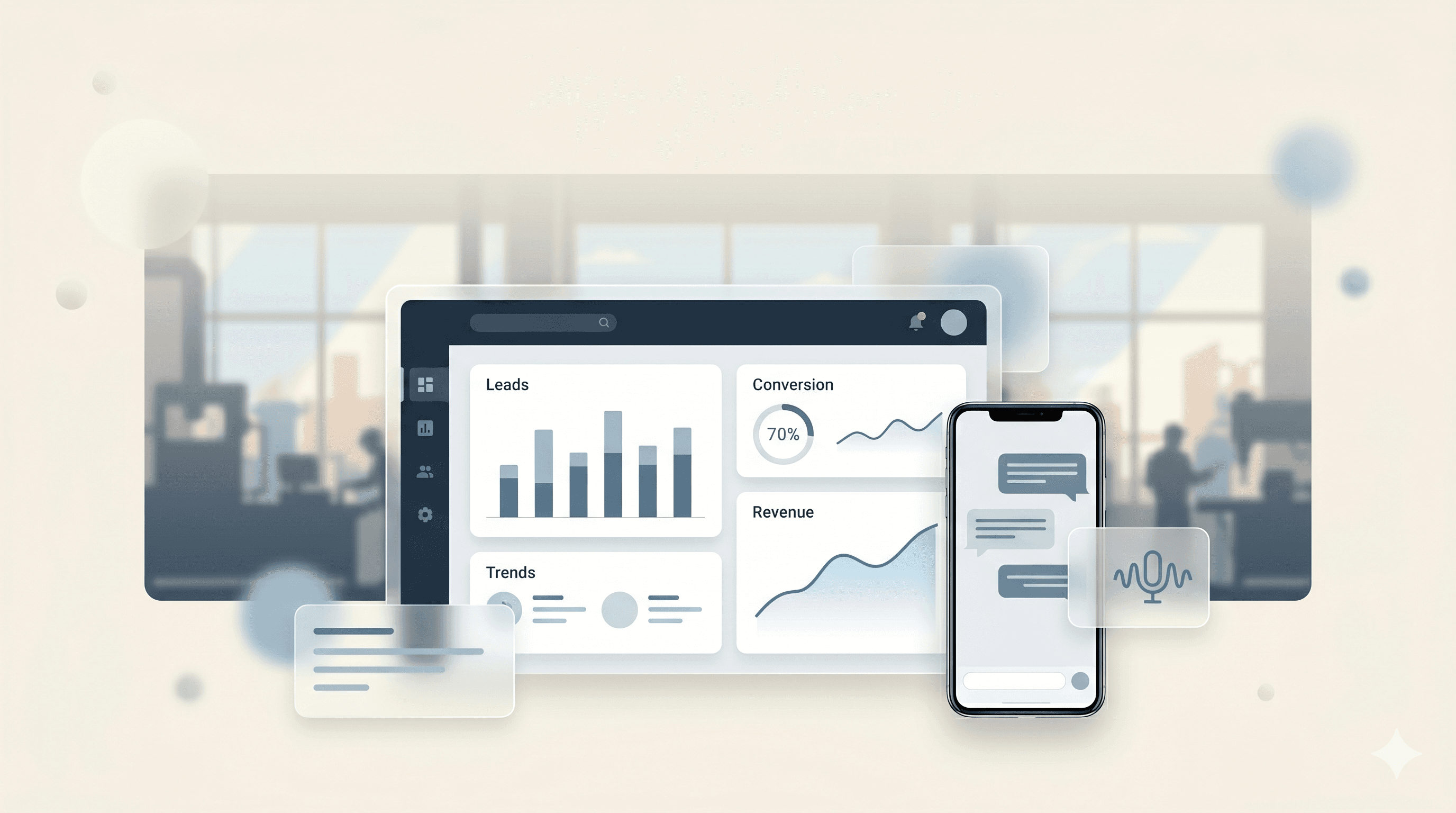
How AI and BI Are Quietly Transforming Industrial Service Businesses
The companies winning in industrial and B2B services today aren't necessarily the ones with the biggest teams or the flashiest marketing budgets. They're the ones that have quietly figured out how to make data work for them, and let intelligent automation handle the follow-up.
Surface treatment, fabrication, facility management, and industrial maintenance are businesses built on relationships, precision, and speed of response. For decades, the tools to run them were spreadsheets, WhatsApp groups, and a good memory. That era is ending. Not with a disruption, but with a quiet upgrade.
The Problem Most Service Businesses Don't Realize They Have
Ask the owner of any mid-sized service company how business is going, and they'll give you a feel-based answer: "Pretty good. Busy." Ask them which customer segment is most profitable, which leads convert fastest, or what the average response-to-quote time is, and you'll get silence, or a guess.
That's not incompetence. That's a data visibility problem. The information exists in job sheets, WhatsApp messages, invoices, and phone logs, but it's never been connected. Nobody has a single view of the business, so nobody can act on it systematically.
The result? Profitable opportunities leak quietly. Follow-ups are forgotten. The salesperson who leaves takes half the client relationships with them.
What Digital Transformation Actually Looks Like for a Service SME
Forget the enterprise playbook. For a services business doing ₹2–20 crore in revenue, digital transformation doesn't mean a ₹50 lakh ERP rollout. It means three things working together:
1. A dashboard that tells you what's actually happening
A well-built BI dashboard pulls data from wherever it lives: job management software, accounting tools, even spreadsheets, and surfaces the metrics that matter: leads by source, quote conversion rates, revenue by client or service type, overdue follow-ups. When a business owner can see this at a glance every morning, they stop managing by gut feel and start managing by fact.
The technology is no longer expensive or complex. Modern business intelligence consulting can configure dashboards for a specific business context in weeks, not months.
2. AI that handles the first and last mile of customer communication
The first call a prospect makes often decides whether they become a customer. If it goes to voicemail, many will simply move on. AI voice agents can now answer inbound calls, ask the right qualifying questions, log the interaction, and route the lead around the clock, without a receptionist.
The same logic applies to WhatsApp, which is where most B2B conversations in India actually happen. Automated yet personalized follow-ups, quote reminders, job status updates, all triggered by workflows, all consistent, none requiring manual effort.
3. A lightweight CRM that ties it together
Generic CRMs are built for generic businesses. A surface treatment company has different stages, different terminology, and different needs than a SaaS startup. A purpose-built lightweight CRM configured around how the business actually works means the AI agents and the dashboards are drawing from and writing to a single source of truth.
This is where the compounding effect kicks in. The dashboard shows what's happening. The AI handles the touchpoints. The CRM remembers everything. The business starts to run like a much larger organization without the headcount.
A Real-World Pattern We're Seeing
Across the industrial services sector, a pattern is emerging. A business that invests in these three capabilities: dashboards, AI communication agents, and a tailored CRM typically sees measurable change within 60–90 days: faster response times, fewer dropped leads, and for the first time, visibility into which parts of the business are actually profitable.
The investment is a fraction of what most people assume. The compounding returns, in time saved, leads converted, and decisions made with data rather than instinct, are significant.
The Question Worth Asking
If someone asked you today: "What's your lead-to-close rate this quarter, and how does it compare to last year?" Could you answer in under two minutes?
If not, that's the gap worth closing. Not with a massive technology overhaul, but with a focused, phased approach: start with visibility, layer in automation, and let the system get smarter over time.
At Quensulting, we help service businesses build exactly this kind of intelligent infrastructure: BI dashboards, AI communication agents, and CRM systems designed around how your business actually works. If you're curious what this could look like for your organization, let's talk.
Frequently Asked Questions
No. Most ₹2–20 crore service businesses see faster ROI starting with a BI dashboard, targeted automation on WhatsApp and inbound calls, and a lightweight CRM configured around their workflow, not a multi-year ERP rollout.
Teams that connect lead sources, quote tracking, and follow-up automation typically see measurable improvements in response time and lead conversion within 60–90 days.
Start with the highest-leakage touchpoints: missed inbound calls, slow quote follow-ups, and status updates customers keep asking for on WhatsApp. Those fixes free capacity without changing how your core service is delivered.
Yes. Modern BI stacks can ingest spreadsheets, accounting exports, and job sheets while you phase in deeper integrations. The goal is a single morning view, not a big-bang migration.